The shore, first.
Room to talk, look at the water, and ask all the small questions before an imagined launch.
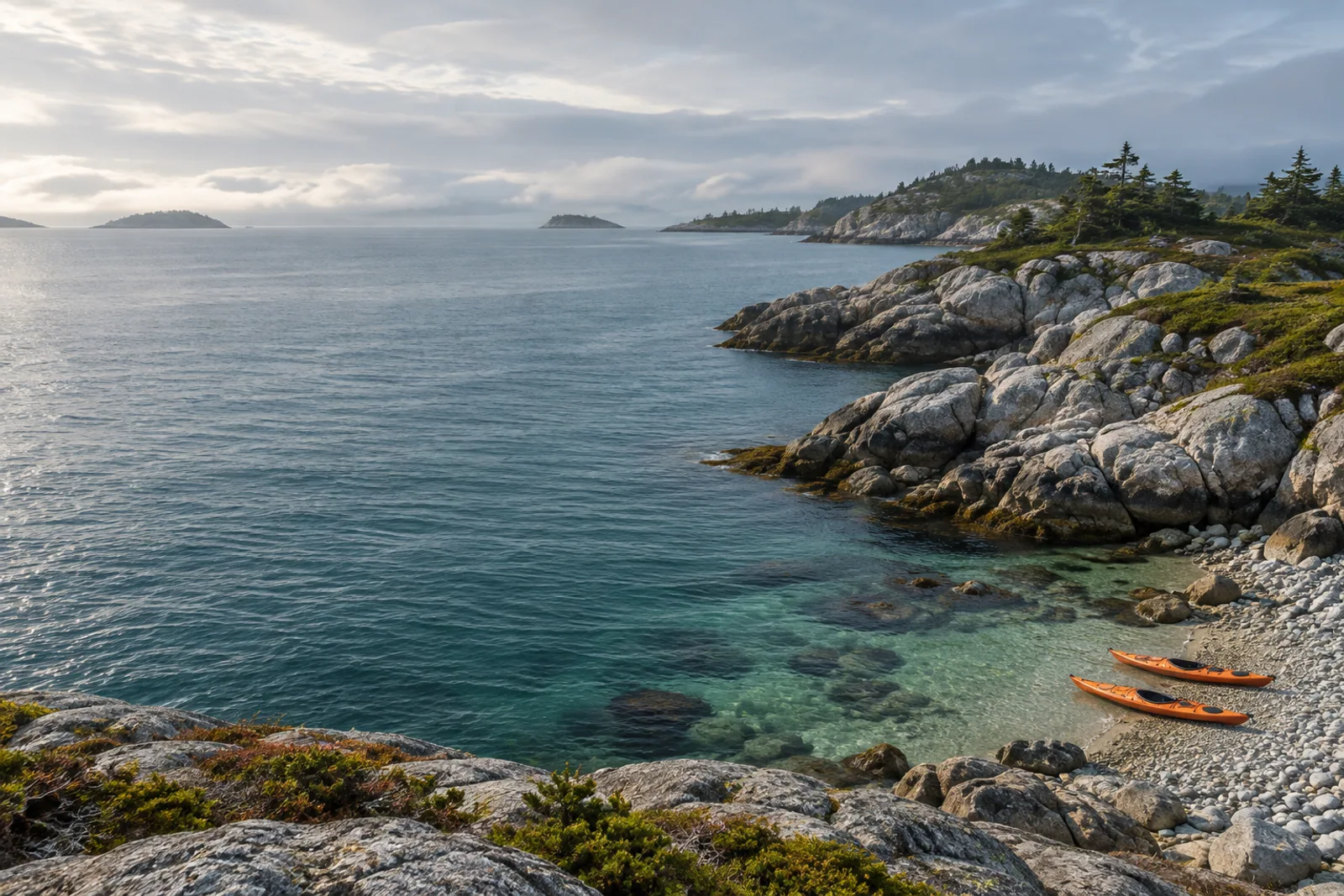
Leave the straight lines behind. Find the small coves, the long pauses, and the view from water level.
Find your lineThree imagined ways to see the coast.
Choose a line. Find a question.
No route is assigned or assessed here.
A tucked-away inlet, a close look at the rock pools, and a looping line back towards the imagined launch.
Start with the questions you have. A real conversation would cover your background, needs, support, equipment, and the day’s conditions before any plan is made.
What would a first sea-paddling conversation and introduction involve? What conditions and support would we need for a sheltered-water outing?
A paddle resting across the deck. The tide drawing a new line on the rocks. That first quiet moment when the shore feels a little further away. This is the sort of day we are imagining.
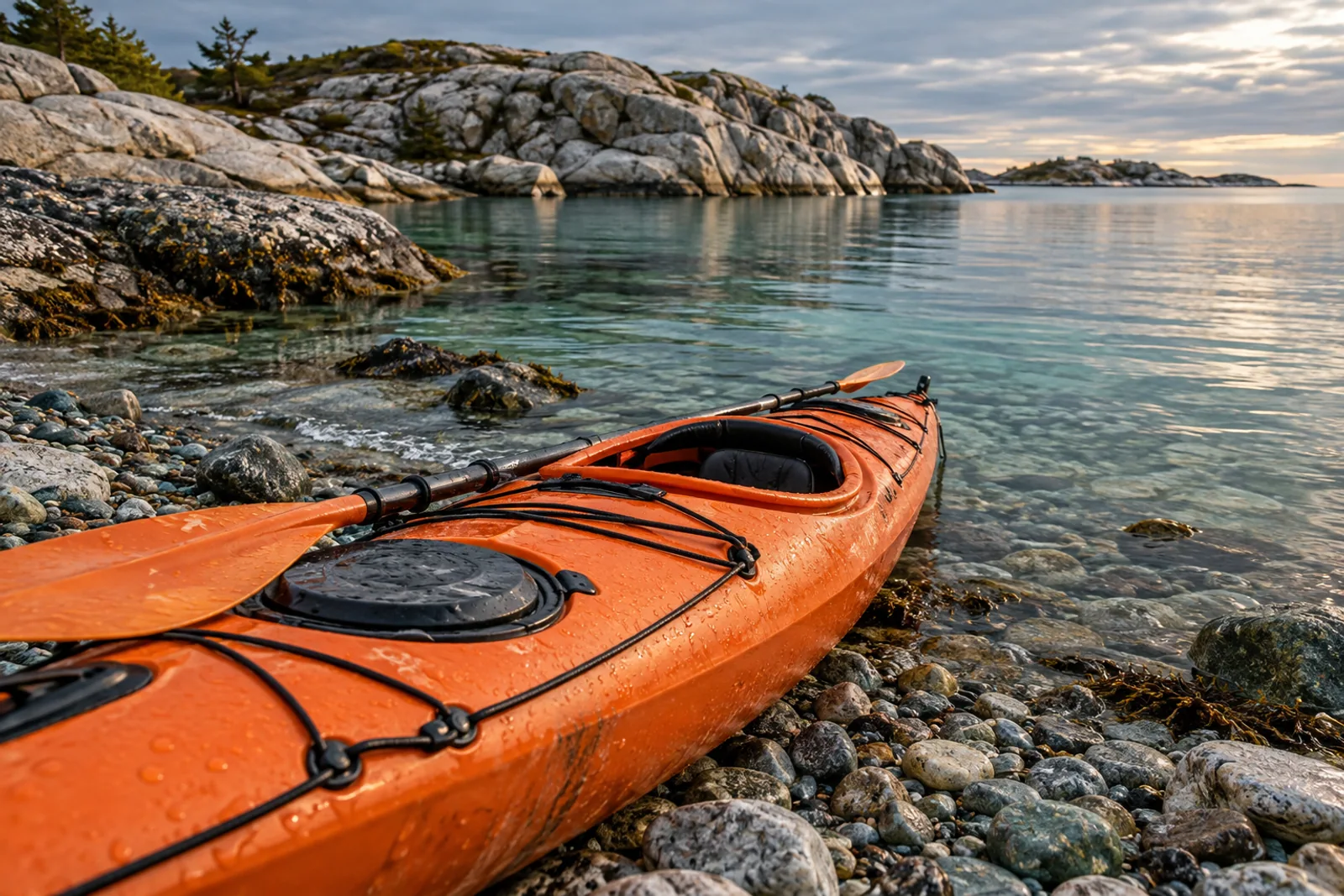
Room to talk, look at the water, and ask all the small questions before an imagined launch.
The curve of a cove. A seam in the granite. A coastline becomes a collection of small discoveries.
A good conversation about a day outdoors makes room for changing plans, taking breaks, and turning back.
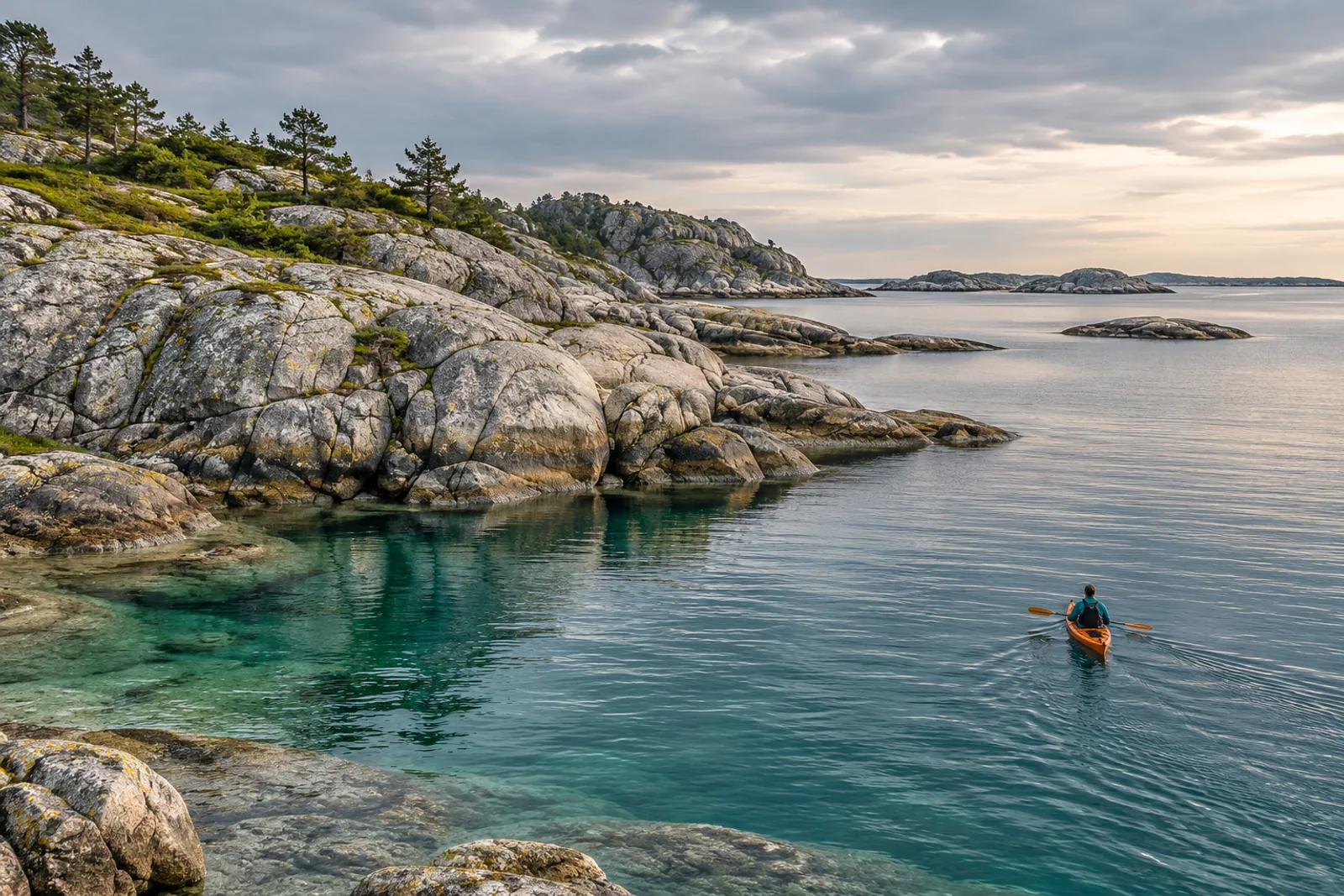
Space to learn. Space to look.
Space for the plan to change.
Your questions and experience are the starting point. This concept does not assign a route or decide whether an outing is right for you.
In a real service, the forecast, tides, local knowledge, and everyone involved would inform the plan. Conditions may change it entirely.
The idea is a day with room to observe, ask, and pause. No distance targets, achievement badges, or promises to push through.
You don’t need a perfect plan.
A little curiosity is a place to start.
What kind of water have you been on? How recently? Share what felt comfortable and what left you with questions.
Ask about equipment, clothing, access, group arrangements, and the support a real operator could provide.
Discuss weather, water conditions, alternatives, and cancellation arrangements with a qualified local operator before making plans.
A starting point for a conversation, not a safety checklist or a recommendation to paddle.
Clear answers. More room
for your own questions.
Choose “My first sea paddle” in the explorer and use the note to collect your questions. It is a conversation starter, not an assessment or permission to go on the water. A real outing needs individual discussion with a qualified local operator.
No. The three routes and their coastline are imagined for this design concept. The schematic has no scale, coordinates, directions, or navigational value. Do not use it to plan or navigate an outing.
This is a local demonstration. There are no places, departure dates, live availability, payments, or bookings. The form prepares one note on this page and sends nothing.
That depends on the location, conditions, intended outing, and support available. Ask a qualified local operator about appropriate craft, equipment, clothing, and preparation. This page does not provide a complete equipment or safety checklist.
Any real outing needs a current conditions review and alternatives. Ask your operator how plans are changed or cancelled and what that means before you commit.
Tell the page what you are curious about. Gather your thoughts for a future conversation.
SALT ROUTE is a fictional concept. This form prepares a note on this page only. Nothing is sent, saved, assessed, or booked.