A rolled green leaf study
Jade Fold
- Flavour
- Green pear · warm grain · orchid
- Leaf
- Tightly rolled, olive-green leaves
- Preparation focus
- Give the rolled leaf room to unfold. In this imagined cup, look for the way a soft floral finish develops.
Tea rewards a closer look. Explore three leaf studies, make a cup your own, and find the words for what you notice.
Explore the tea studies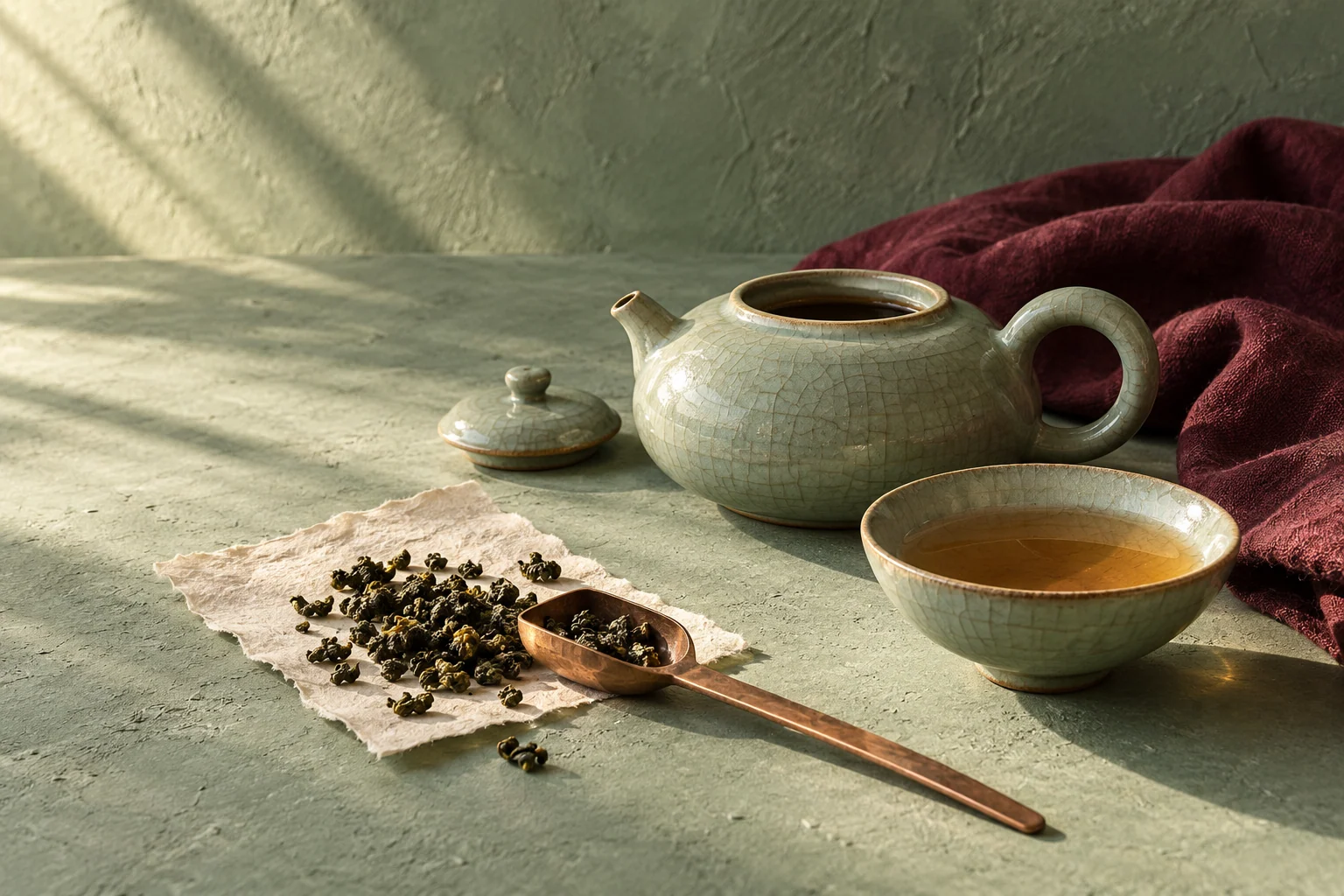
Not a catalogue. A collection of curiosities.
Choose a fictional study to look a little closer.
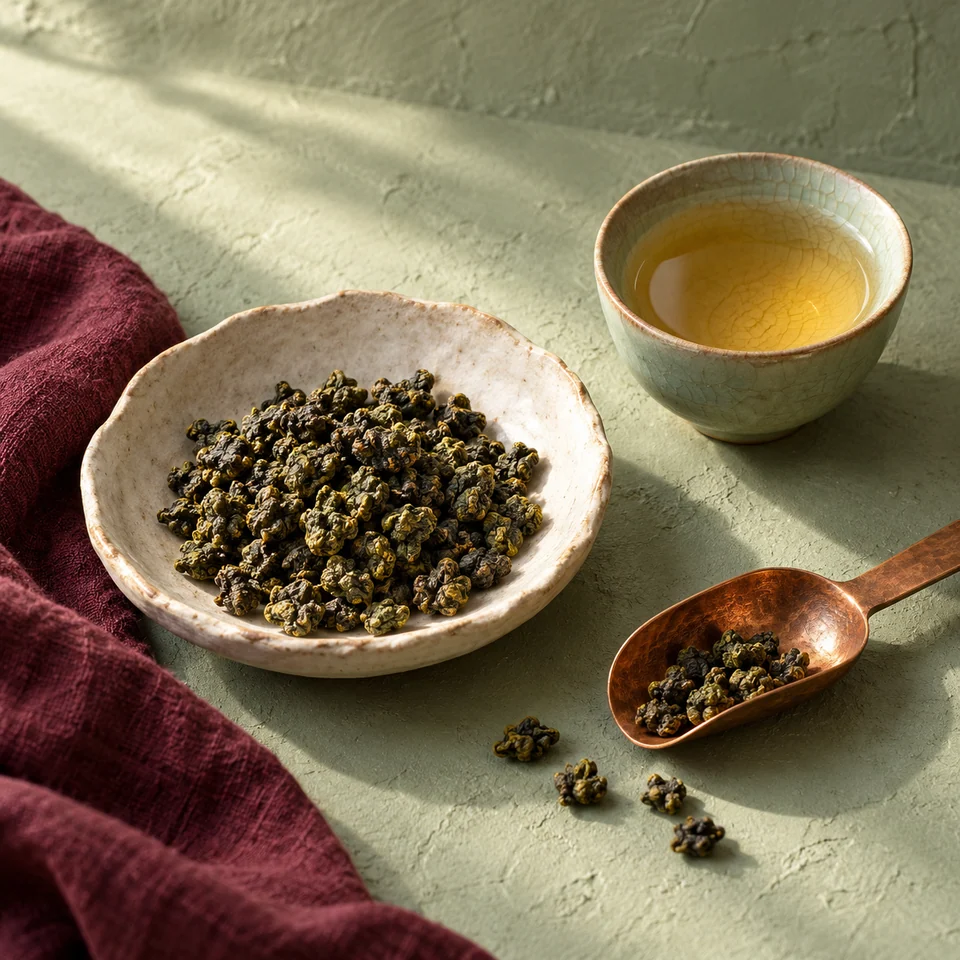
Green pear · warm grain · orchid
A small, folded leaf with a generous imagination. Pear at the first sip, the warmth of grain in the middle, a quiet floral thought at the end.
Give the rolled leaf room to unfold. In this imagined cup, look for the way a soft floral finish develops.
Find your way to a cupAll three imagined profiles, together. Flavour notes describe associations, not ingredients.
Our imagined atelier begins with the smallest thing on the table: the leaf. We look at its shape, imagine how it might open, then let the cup tell the rest. An unhurried approach to a very ordinary pleasure.
There is no wrong word
for what you notice.
Leave a little space between making
a cup and deciding what it tastes like.
Shape, colour, a curl or a fold. Begin with what is in front of you, before the water changes it.
A leaf makes its own small movement. Notice the colour in the cup and the fragrance above it.
A familiar fruit. A texture. A memory. Your first association is a useful place to begin.
You do not need a tasting wheel.
Just a place to begin.
What comes to mind before the first sip? Let the fragrance suggest a familiar place or ingredient.
Light or rounded? Soft or drying? Describe the feeling in your own words.
What stays with you after a sip? Notice whether the last impression differs from the first.
Choose how you would like to observe.
For real tea, follow the instructions
that come with your leaves.
Jade Fold: round, soft, gently floral. What changes as this cup cools?
TEA MEASURE is a fictional loose-leaf tea atelier. Jade Fold, Copper Dusk and Silver Mist are creative studies, with no products for sale, stock or delivery service.
No. Pear, cocoa and meadow are imagined tasting associations. They are not an ingredient list or an allergy statement for any real tea.
Use the preparation instructions that accompany your actual tea. The approaches here are ways to organise an observation, not recipes for a particular product.
No. A useful note is one you recognise later. Start with something familiar, and let your description change as you take another sip.
It is only displayed on this page while it remains open. Nothing is sent or stored. Copy it yourself if you would like to keep it; refreshing the page clears it.
A detail worth returning to.
A word you want to remember.
A question for the next cup.
TEA MEASURE is a fictional atelier. This note stays on this page only. Nothing is sent or saved; refreshing clears it.