What did you notice first when you opened your childhood front door?
A smell, a sound, or someone who was usually there.
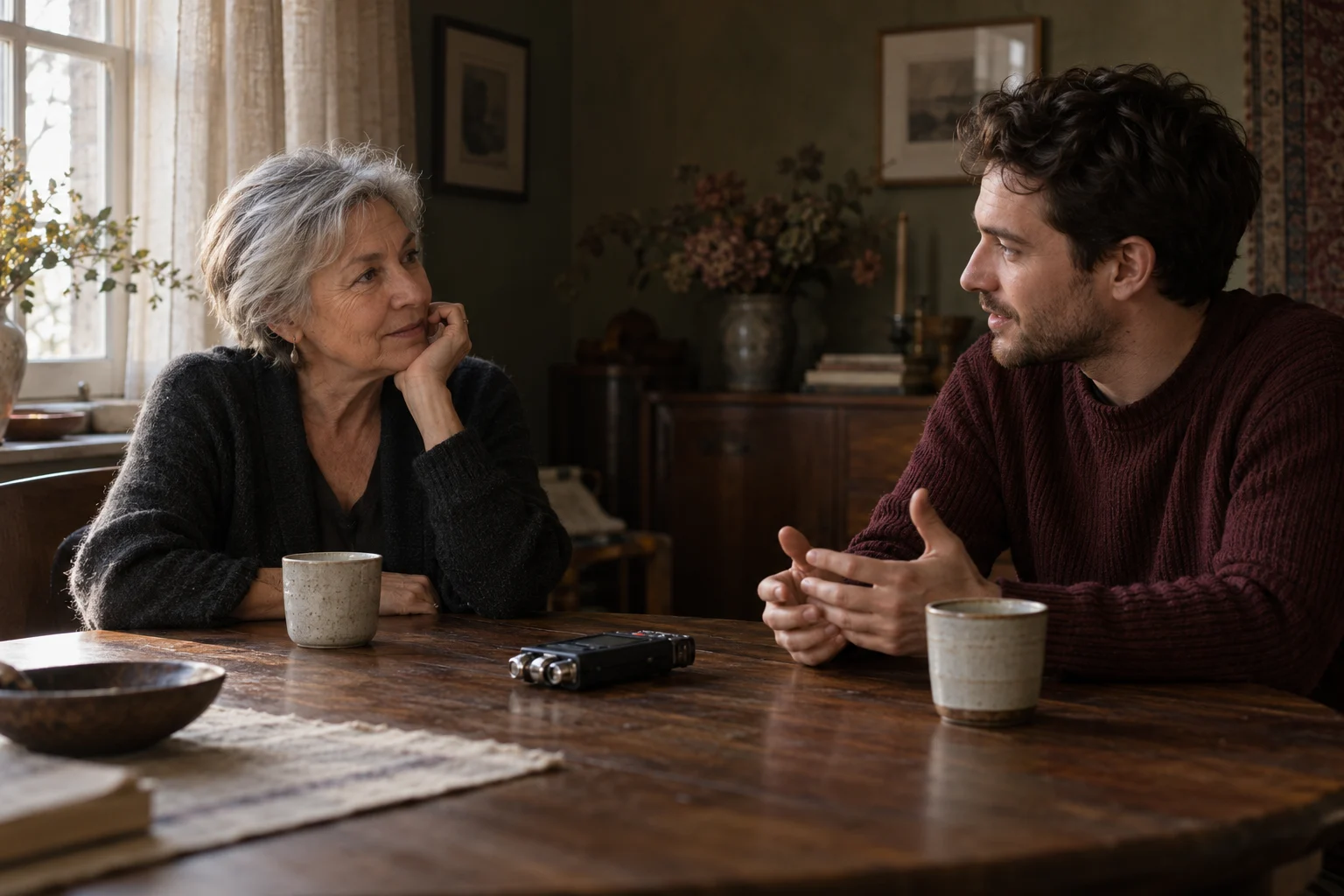 A LITTLE TIME, TOGETHER.
A little room for the stories that sound most like the people you love.
Begin with a questionThe familiar turn of a phrase. The detail nobody else remembers. A conversation makes room for the ordinary things that rarely find their way into a photograph.
Choose up to four questions.
Put them in your own order.
Leave room for the unexpected.
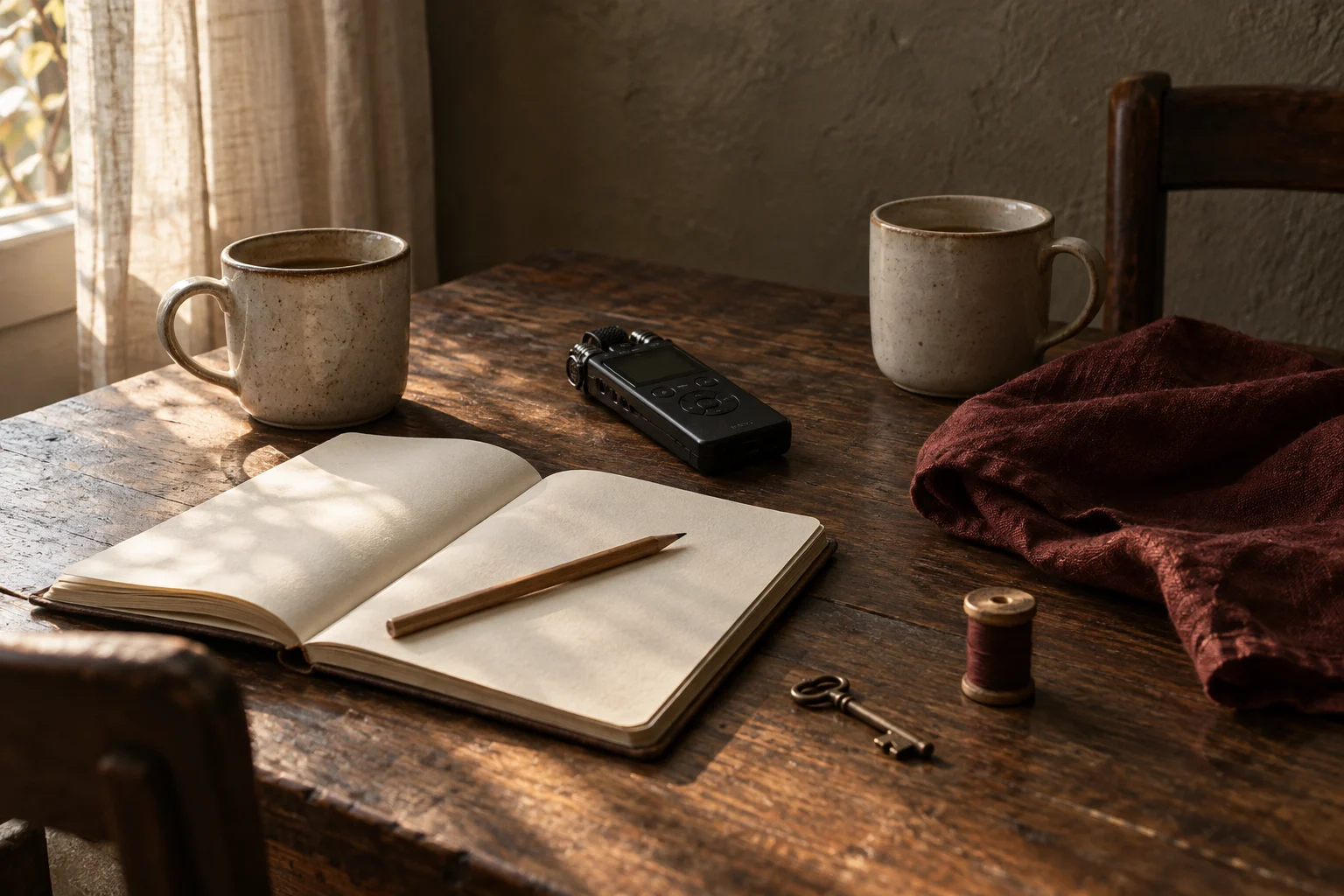
A front door. A long journey. A room you can still picture.
A smell, a sound, or someone who was usually there.
It can be a very short journey.
Start with where the light came in.
Your outline is waiting. Add a question from any theme above.
Let one person finish before offering your own memory. Ask what happened next, and leave room for silence.
Questions stay in this page until you copy them or leave.
 MAKE ROOM FOR A VOICE.
If a small detail catches your attention, stay with it. “What was that like?” can open more than a new question.
A pause is part of the conversation. Give a thought time to arrive without feeling you have to fill the space.
Any question can be skipped. Ask before recording, and agree together what can be kept or shared.
Different ways to begin.
The same room to be heard.
One voice, with room to follow its own thread.
Let one person finish before offering your own memory. Ask what happened next, and leave room for silence.
A few voices, finding the story between them.
Invite each person to speak in turn. Different memories can sit beside each other; they do not have to become one version.
Somewhere familiar, with a little time and as few interruptions as you can arrange.
Offer a sense of the conversation beforehand. There is no need to prepare perfect answers.
If you later record a conversation elsewhere, agree on consent, access and keeping or deleting it together.
A working title and a thought about where to begin. No personal names or details are needed.
 An outline, ready for a real conversation.
This is a fictional concept with generated adult portraits. Nothing is recorded, sent, saved or booked.
No. This fictional concept helps you assemble questions and a local session note. It does not record audio, upload media, book a session or create a saved archive.
No. A familiar meal, a first day, or the way a room felt can be a useful beginning. The person telling the story decides what matters.
Skip the question, change the subject, or stop. Agree on that freedom before you begin. Choosing questions here creates no obligation to answer them.
It stays in temporary page memory. Copy the outline if you want to keep it. Refreshing, leaving the page or resetting clears your work. Nothing is sent or saved by this page.
The adult portraits and table photographs were generated for this fictional concept. The questions are original examples. No real family history, testimonial or recorded voice is presented.