One familiar pencil
A soft graphite pencil can make a fine edge, a broad shadow and everything in between. Start with the one you have.
Explore pressure before adding tools.Nature, observed by hand
Nature-drawing workshops for curious eyes. Find a small detail, follow a line, and make a little room for the wild.
Find your first mark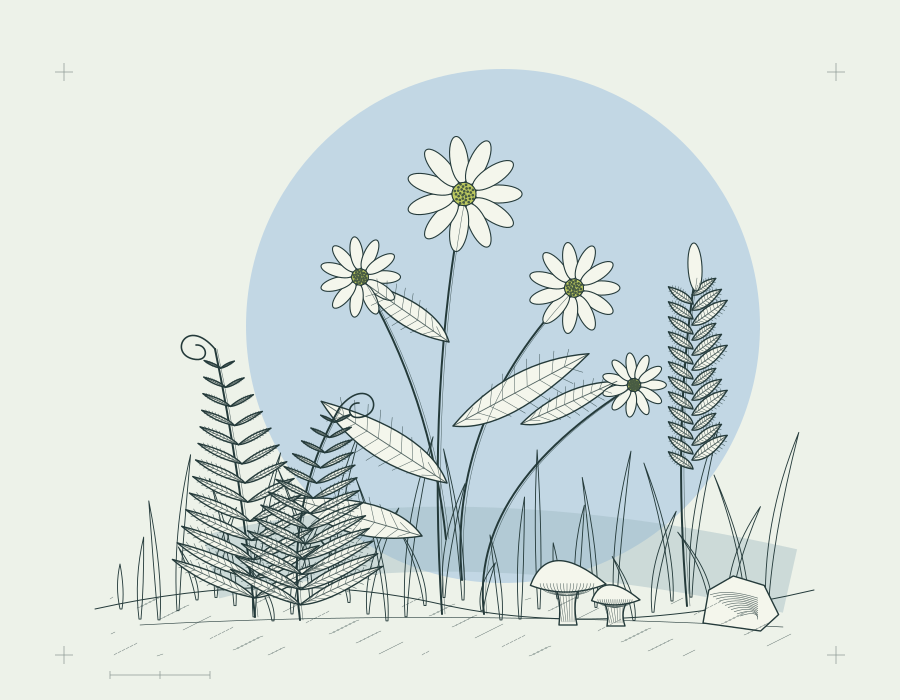
A practice of paying attention
A bent stem. A tangle of roots. The quiet shape between two leaves. Nature gives us more than enough to begin with.
WILD MARGIN is an imagined drawing-workshop practice for people who want to slow down and see. No rush to get it right. Just a pencil, a little curiosity, and the pleasure of noticing.
Find a way to beginThe observation table
Choose an imagined habitat, then try a different kind of mark. There is more than one way into a drawing.
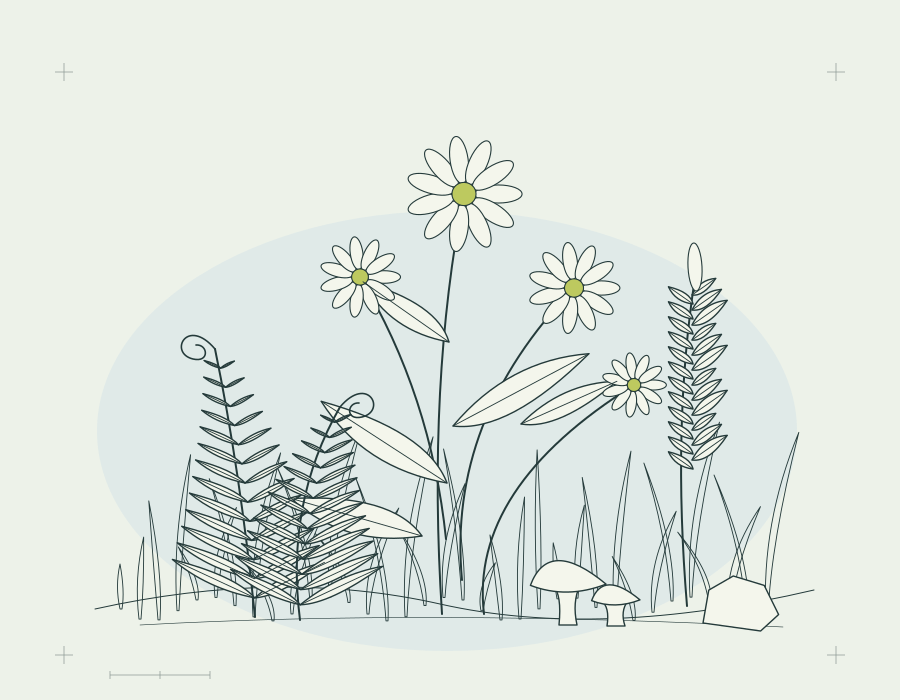
Start at the tip of one petal. Follow its outside edge without naming the flower. Let your line travel down the stem, then stop where another form interrupts it.
Notice where the stems cross, and where they leave the sky alone.
Flower heads lean into open space. A fern unrolls below them. Between the tall stems, smaller shapes make their own small world.
Keep this starting point
A small kit is enough
A soft graphite pencil can make a fine edge, a broad shadow and everything in between. Start with the one you have.
Explore pressure before adding tools.Loose sheets or a small sketchbook. A surface with some texture gives a light mark somewhere to settle.
Leave a generous margin.Lift a little light back out of graphite. An eraser can make a mark of its own; it does not have to correct anything.
Make room for the unfinished.Ways to make time
Start gently, stay a little longer, or share the page. These imagined formats leave room for your own kind of curiosity.
A gentle start with looking, edges and a few simple marks. An imagined small-group workshop for anyone who has been waiting to begin.
Beginner curiosity · Guided experiments · A page to keepSpend a little longer with one small subject. Try different pressures, return to an overlooked detail, and let the drawing record your attention.
One subject · Layered observation · Time to exploreLay a few pages side by side. See how differently the same world can be drawn, exchange an observation and find a starting point for next time.
Shared looking · Gentle reflection · Another beginningAn imagined creative practice. No live workshops or bookings.
From the imagined sketchbook
A page can be a collection of attempts. Keep the crooked line, the unexpected texture, the part you want to return to.
A line can pause, change direction and begin again. An unfinished page still holds a way of seeing.
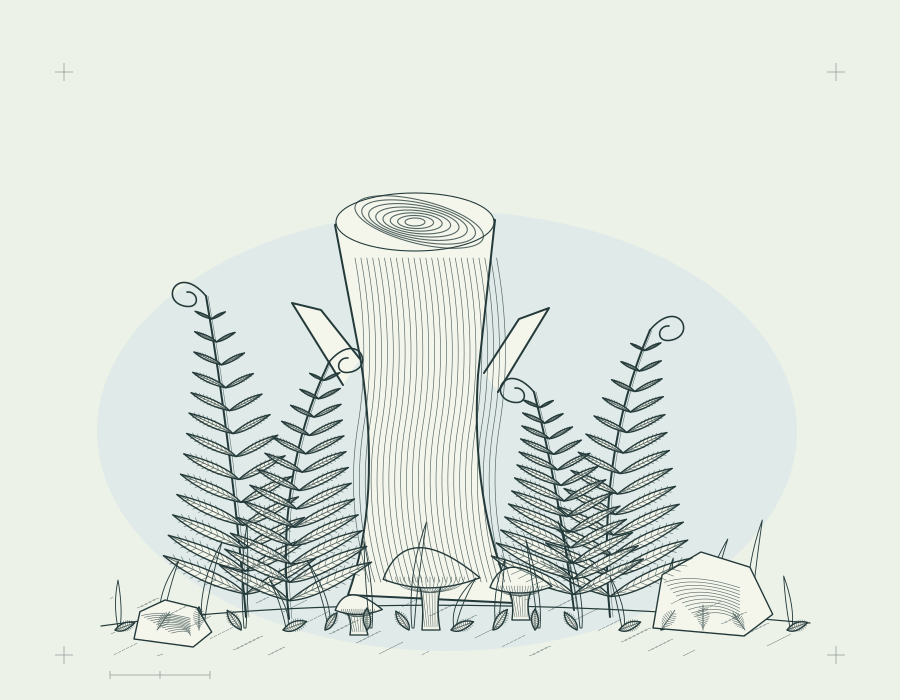
Bark, fern and shadow each ask for a different rhythm. Let the marks tell them apart.
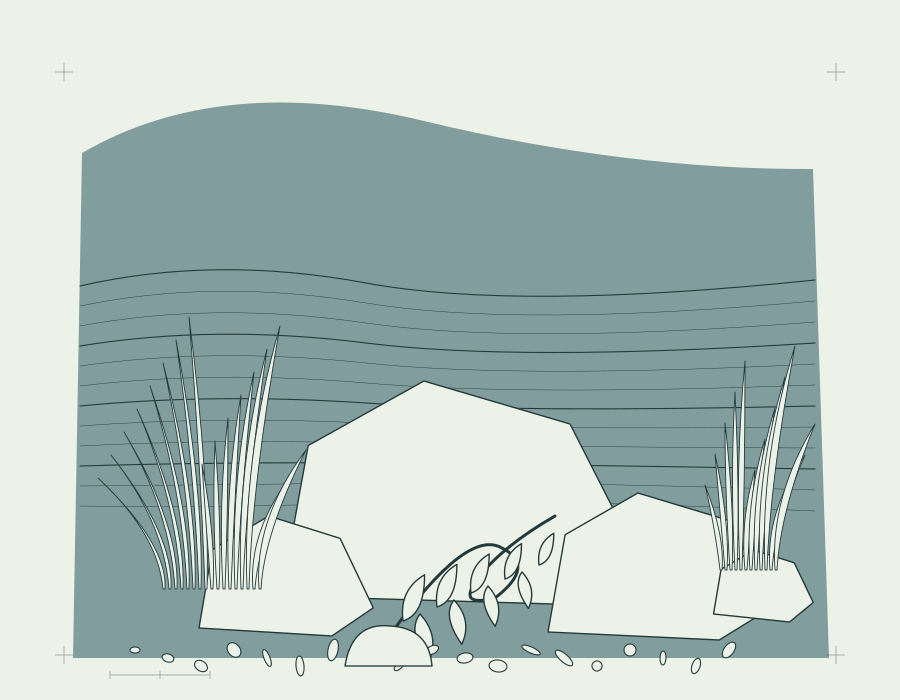
The open space around an object has a shape of its own. Sometimes it is the best place to start.
Your next blank page
Give your next drawing a starting point. Use an invented title, keep your chosen habitat and approach, and write a small intention.
Find one detail that makes you want to stay. It can be very small.
Curiosity first.Let the first line be a beginning, not a test of the whole page.
Keep it light.Return to a shape, try another pressure or leave a little room for next time.
There is no finish line.Before the first mark
No. The imagined workshops begin with looking and make room for different ways of drawing. The exercises are invitations to explore, not a test of skill.
WILD MARGIN is a fictional nature-drawing practice. The workshop formats and habitats are creative examples, with no real venue, instructor, event schedule or booking service.
No. The drawings combine imagined natural forms for creative observation. They do not identify species or provide scientific, foraging, route or outdoor-safety advice.
Your note is prepared only inside the current page. Nothing is sent or saved to an account. Reloading clears it. Use an invented title and a drawing intention; no personal details are needed.
A pencil and a few sheets of paper are enough to try the exercises on this page. The kit suggestions are creative starting points, not a required purchase list.